This is a video by Bruce Schneider, whose paper was plagiarized. This is from a security conference called CRYPTO.
Copyright C. PakSEF 2002 - 2007
PakSEF and ScitechWire are trademarks of the Pakistan Science and Engineering Foundation
Saturday, April 28, 2007


Thursday, April 19, 2007
Technology versus Humanity
For a while now, I have been wondering about the moral responsibility of people like us, who work in the tech industry here in the Bay Area for human rights abuses enabled by our products. Here's the first real effort I have seen to put some legal and real shape to the concerns:
Yahoo! sued over torture of Chinese dissident
Chinese political prisoner sues Yahoo! in a US federal court in what is believed to be first case of its kind
Rhys Blakely
A Chinese political prisoner sued Yahoo! in a US federal court, accusing the internet company of helping the Chinese government torture him by providing information that led to his arrest.
The suit, filed under the Alien Tort Claims Act and the Torture Victims Protection Act, is believed to be the first of its kind made against an American internet company.
More here....
One of the few stories I have seen in this regard was:
Gag Orders
Is the work of Cisco Systems and other high-tech companies helping China to crack down on dissent?
By DK Sweet
EARLIER this year, on CNBC, business news junkies were treated to another superlative on-camera performance by one of America's foremost business superstars. Donald Trump may best personify the cheesy pop-culture idea of a celebrity businessman, but to the stockholder class, Cisco Systems' John Chambers is the Real Deal. Compare the income, size, growth and influence of international Internet infrastructure colossus Cisco to The Donald's twice-bankrupt real estate empire and Trump might as well be Chambers' pool boy.
More here...
Technorati tags applicable to this post: Technology and Society - Yahoo! - Torture - Human Rights
Yahoo! sued over torture of Chinese dissident
Chinese political prisoner sues Yahoo! in a US federal court in what is believed to be first case of its kind
Rhys Blakely
A Chinese political prisoner sued Yahoo! in a US federal court, accusing the internet company of helping the Chinese government torture him by providing information that led to his arrest.
The suit, filed under the Alien Tort Claims Act and the Torture Victims Protection Act, is believed to be the first of its kind made against an American internet company.
More here....
One of the few stories I have seen in this regard was:
Gag Orders
Is the work of Cisco Systems and other high-tech companies helping China to crack down on dissent?
By DK Sweet
EARLIER this year, on CNBC, business news junkies were treated to another superlative on-camera performance by one of America's foremost business superstars. Donald Trump may best personify the cheesy pop-culture idea of a celebrity businessman, but to the stockholder class, Cisco Systems' John Chambers is the Real Deal. Compare the income, size, growth and influence of international Internet infrastructure colossus Cisco to The Donald's twice-bankrupt real estate empire and Trump might as well be Chambers' pool boy.
More here...
Technorati tags applicable to this post: Technology and Society - Yahoo! - Torture - Human Rights
Copyright (c) PakSEF 2002 - 2007
ScitechWire and PakSEF are trademark of the Pakistan Science and Engineering Foundation
Pakistan's wetter weather linked to global warming
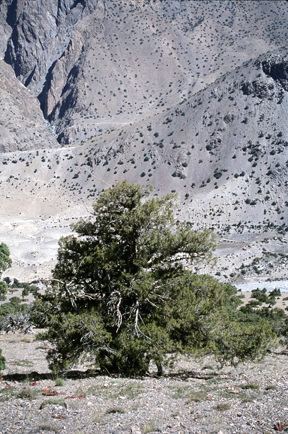 New data from millennium-long tree-ring analyses are indicating that mountains in northern Pakistan have grown significantly wetter over the past century than they have been over the last millennium — quite possibly due to human-induced global warming, the researchers say.
 In the Karakorum and Himalaya mountains in northern Pakistan, the upper reaches of the Indus Valley (which supplies the world's largest irrigation network), a group of researchers collected samples of Juniper tree rings that dated back as far as A.D. 828. "Tree rings can tell a lot about precipitation changes over time," such as how much precipitation fell and whether it fell in the form of rain or snow, says Kerstin Treydte of the Swiss Federal Research Institute WSL in Birmensdorf, Switzerland, and lead author of the study in today's Nature.
Treydte's team measured the oxygen isotope ratio in the rings and found that most of the precipitation in the region fell as snow, which they expected given the high elevations. And over the last 1,100 years, the hydrologic cycle there intensified at an unprecedented rate, Treydte says. The team suggests that the precipitation increases aren't just temporary changes, and the increases may be too great to be due to natural variability.
New isotopic research on the rings of 1,172-year-old Juniper trees in the mountains of northern Pakistan is revealing that the 20th century was the wettest century of the past millennium, possibly due to human-induced global warming. Image is courtesy of Kerstin Treydte.
The tree rings revealed periods of wetter-than-normal weather that lasted about a decade, such as around the years 1200, 1350, 1500 and 1870, and drier periods around 1270, 1420, 1600 and 1720, the team reported. In the 1790s and 1890s, the tree ring record showed severe droughts, which correlate with historical records of drought and famines in India. The data collected from the tree rings also roughly corresponds to historical records of extreme weather in other parts of the world, Treydte and colleagues wrote.
"But what is most significant, Treydte says, is "a cluster of peak precipitation periods during the late 19th and 20th centuries" that are at the upper limits of what the data show for the last 1,100 years. Furthermore, "we have empirical evidence that precipitation increased as temperatures increased," she says.
Increasing global temperatures over the past 150 years are "at least partly" the result of "the increase in anthropogenic greenhouse gases during this time," the team wrote. "We're not atmospheric scientists," Treydte says, "so we're not going to argue that the increasing precipitation is directly caused by a carbon dioxide increase" in the atmosphere. "What we will say, is that at the same time as the Industrial Revolution began, [carbon dioxide] increased, and there was a coincidental increase in precipitation — so there could be a human role," she says.
One of the biggest uncertainties in predicting climate change involves the hydrologic cycle — both "the net effect of water in the climate system and the way in which water will be redistributed over the surface of the planet," wrote Michael Evans of the Laboratory of Tree-Ring Research at the University of Arizona in Tucson in an accompanying commentary also in today's Nature. Understanding the hydrologic cycle and how it might be affected by warming temperatures is complex (see Geotimes, March 2006).
But research indicates that warming temperatures can lead to increases in the moisture-holding capacity of the atmosphere, altering the hydrologic cycle and characteristics of precipitation events, including the frequency, amount, intensity and duration, Treydte and colleagues wrote. And Treydte's team's "compelling" results roughly match climate models' predictions for the hydrologic cycle's intensity, Evans wrote, which adds further support to the researchers' hypothesized link between certain climate change effects and increases in greenhouse gas emissions. Such a link would certainly help improve confidence in climate models, he wrote.
Still, Evans noted, correlating anthropogenic climate change with the hydrologic cycle is tricky, as many factors must go into the models, and many uncertainties remain. Although this is the first tree-ring isotope record that is longer than a couple hundred years, more research is necessary. A denser network of precipitation gauges, for example, would help researchers distinguish natural variability from human-induced climate change, he wrote. "All of these advances will assist in the crucial work of climate-change detection and attribution."
[Article cross-posted from GeoTimes]Copyright C. PakSEF 2002 - 2007
ScitechWire is a trademark of the Pakistan Science and Engineering Foundation
A non-profit 501(c)(3) California based organization
Tuesday, April 17, 2007
City’s plants struggle to stay green due to smog: study
 KARACHI: Air pollution in the city has caused a 60 percent increase in various diseases and has damaged the natural ability of plants to release oxygen, stated a report prepared by the Space and Upper Atmosphere Research Commission (SUPARCO) after a survey of 28 of Karachi’s main arteries.
Five scientists, two engineers and other technical staff studied air and noise conditions by using two mobile laboratories. They tested shopkeepers and pedestrians and took blood samples of drivers and traffic policemen, which were later tested at Liaquat National Hospital.
“Cancer and other diseases of the ear, throat and lungs have increased by 60 percent, due to the smoke emitted by vehicles, which is basically a form of carbon dioxide,” the report said.
Air pollution and high-rise buildings have damaged the greenery of Karachi by blocking proper sunlight for plants. “Air pollution has altered plant colouring by making it blackish. Leaves have also shrunk. Buildings are affected as there is a thick layer of oil and dust on their entire structure,” said the report.
Air pollution is much higher than the standards set by the World Health Organization and the World Bank, especially along the stretch of MA Jinnah Road between Tibet Center Saddar and Mereweather Tower.
The SUPARCO team has asked the relevant officials to impose a ban on diesel vehicles and garbage burning. In addition, two-stroke rickshaws should be replaced with four-stroke ones.
The team pointed out that Karachi’s roads were planned for 750 vehicles in an hour, but were being used by 11,000 vehicles.
Dr Qaiser Sajjad, an ENT surgeon at Abbasi Shaheed Hospital and secretary of the Pakistan Medical Association, said that children were the worst affected by air pollution. He added that the high court had taken a suo moto action by ordering the authorities concerned to eradicate pollution in three months. However, the government had as yet not taken this matter seriously.
“If the government does not take the necessary steps, then in the coming five years the situation will become uncontrollable,” he said. ppi/DailyTimes
Copyright C. PakSEF 2002 - 2007
ScitechWire and PakSEF are trademark of the Pakistan Science & Engineering Foundation
Saturday, March 31, 2007
Prof. Abdus Salaam...A co-founder of High Energy Physics [HEP]
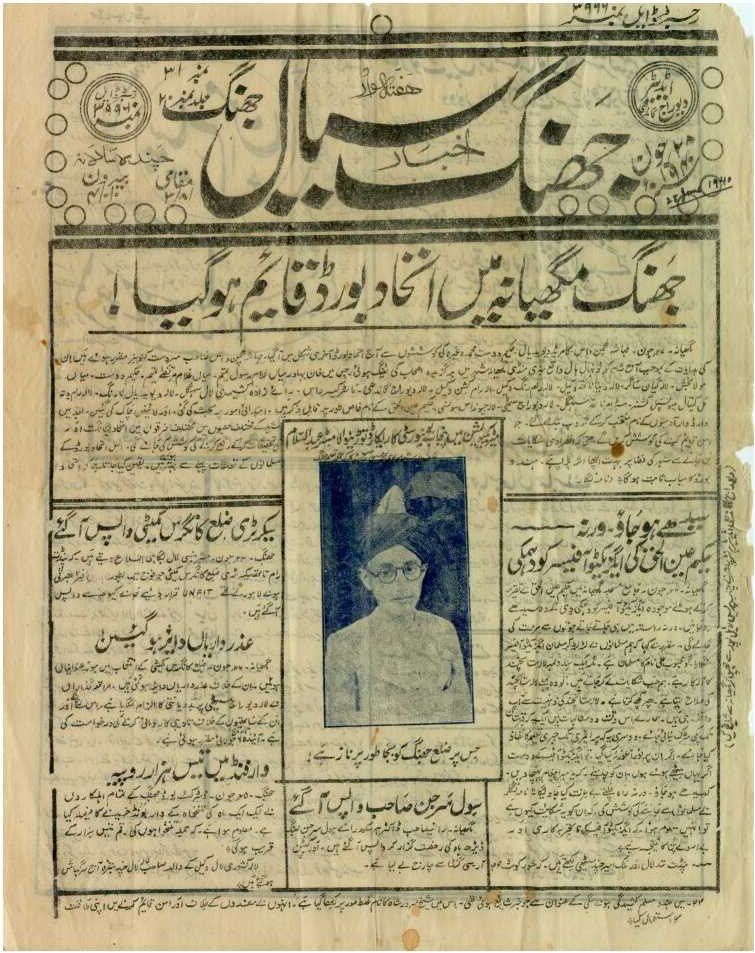 Abdus Salam was born in Jhang in 1926. At the age of 14, he got the highest marks ever recorded for the Matriculation Examination in Punjab. The whole town turned out to welcome him. He won a scholarship to Government College, Lahore, and took his MA in 1946. In the same year he was awarded a scholarship to St. John’s College, Cambridge, where he took a BA (honours) with a double First in mathematics and physics in 1949. In 1950 he received the Smith’s Prize from Cambridge University for the most outstanding pre-doctoral contribution to physics. He also obtained a PhD in theoretical physics at Cambridge; his thesis, published in 1951, contained fundamental work in quantum electrodynamics which had already gained him an international reputation. [Click to Read More]
Copyright C. PakSEF 2002 - 2007
ScitechWire is a trademark of the Pakistan Science and Engineering Foundation
A California based non-profit organization registered under section 501(c)(3) of the Internal Revenue Code.
Tuesday, March 27, 2007
Pakistan has leapt to the forefront of IT training for women
The role of women in plugging IT skills gap has been given a boost in one of the world's most important developing regions.
Pakistan, the sixth most populous country in the world and second most populous Muslim country worldwide, has leapt to the forefront of IT training for women with the opening of a women-only Cisco® Networking Academy® Program Regional Academy in Lahore, the country's second city.
Women-only Local Academies have previously been launched, and still operate, in countries such as Togo and Saudi Arabia.
But what makes the Lahore initiative special is that it is a Regional Academy: in other words, one tasked with providing support and training for Local Academies in the region.
The Lahore College for Women University (LCWU) started operating as a Regional Academy in May this year, adding to its already considerable reputation as one of the oldest female institutions in Pakistan.
It first opened its doors to students in 1922 and today it has more than 6,500 women enrolled on intermediate, degree and postgraduate courses.
The addition of Networking Academy program training is highly significant given the growing IT skills shortage faced by the country.
Copyright C. PakSEF 2002 - 2007
ScitechWire is a trademark of the Pakistan Science and Engineering Foundation
A non-profit organization in California, registered under section 501(c)(3) of the Internal Revenue Code
Monday, March 26, 2007
Conference on Language and Technology
 The fields of linguistics and computational linguistics are very important. Throughout the world there are hundreds of institutes offering degrees in these disciplines and people are doing research for their languages.
 Unfortunately, the importance of these disciplines is not realized (as it should have been) in Pakistan. Research in this area is mostly limited to individual efforts that need to be transformed into institutionalization. The conference is an effort to educate the masses and the decision making authorities to realize the importance of these extremely needed disciplines especially in this modern age of computers
Venue: Bara Gali Summer Campus, University of Peshawar, N.W.F.P., Pakistan
Dates: August 7 - 11th, 2007
Dates: August 7 - 11th, 2007
Click to register
Copyright C. PakSEF 2002 - 2007
ScitechWire is a trademark of the Pakistan Science & Engineering Foundation
A California based non-profit organization registered under section 501(c)(3) of the Internal Revenue code
Monday, March 19, 2007
[PakSEF-VSTTT] Internet censorship
[The following article was initially posted to the AOPP pakeditor mailer by Adnan Gill. Later cross posted to the PakSEF Virtual S&T Think Tank.]
This is issue about internet censorship is an issue of concern. The internet is a one of the few mediums which has revolutionized the world, bring peoples from various regions closer together, exposing people in remote parts of the globe to novel ideas, bringing about constructive social change, providing University level education to peoples who once couldn't even fathom attending a prestigious College or University.
The internet has indeed opened up many doors where people can benefit and grow themselves, however this internet revolution is threatened by various authorities (both government and private) who try to control the flow of information to their constituents.
This is issue about internet censorship is an issue of concern. The internet is a one of the few mediums which has revolutionized the world, bring peoples from various regions closer together, exposing people in remote parts of the globe to novel ideas, bringing about constructive social change, providing University level education to peoples who once couldn't even fathom attending a prestigious College or University.
The internet has indeed opened up many doors where people can benefit and grow themselves, however this internet revolution is threatened by various authorities (both government and private) who try to control the flow of information to their constituents.
AR Rafiq
PakSEF, www.paksef.org
Kindling the flame of Science & Innovation...
Adnan Gill
WHILE the global uproar over the government’s recent attempts at gagging the mainstream media in Pakistan may lead it to a hands-off-the-media policy for now, it brings little relief to those nationalist media organs and groups whose websites continue to be blocked. Dozens of internet blogs and sites run by Baloch, Sindhi and even smaller ethnic groups continue to face the ban, with internet service providers forced by the government to apply filters to block their viewing in the country. While the initiated internet users know how to circumvent the ban via a third domain, it is the blocking of direct access to a particular blog or a socio-economic and political forum which presents the government and the country in equally bad light as do attempts to gag the popular media. The internet is a common cyberspace shared by users globally; there are innumerable sites run by rights activists which provide lists of the websites banned by a given government. Gen Musharraf’s has the dubious distinction of being listed among the world’s most xenophobic regimes censured for curtailing people’s access to information.
That this has been happening for months with media organs representing Pakistan’s smaller ethnic communities which do not find a voice in the mainstream media is all the more reprehensible. It is good that now when the national media and civil society are rallying behind the cause of the freedom of the press, the Pakistan Oppressed Nations Movement has also decided to take part in the multi-party conference called by the PML-N in London later this week. This will provide the nationalist leaders a wider platform from which to voice their grievances and become part of the mainstream opposition to press the government for greater civil liberties and for enforcing the rule of law.
http://www.dawn.com/2007/03/19/ed.htm#3
Copyright PakSEF (C) 2002 - 2007
ScitechWire is trademarked to the Pakistan Science and Engineering Foundation
Friday, March 16, 2007
Harbour pollution costs navy $1B a year
ISLAMABAD, March 15: Severe pollution in Karachi harbour, caused by untreated industrial affluent and municipal waste, is not only taking its toll on marine life and civilian population but also causing $1 billion worth of losses to Pakistan Navy (PN) every year.
All the navy platforms including surface ships, fleet tankers, mine hunters and missile boats berthed at Karachi’s upper harbour and PN Dockyard had been severely damaged by the seawater, the composition of which has changed for the worst due to unbridled pollution in recent years, Commander PN Rear Admiral Mehmood Ahmed Khan told the Senate Standing Committee on Defence here on Thursday.
He expressed fears that some of the vital PN assets would not be available to it at ‘crucial times’ if the low conductivity and increased chloride and sulphate in seawater continued to inflict damages.
He said Indian navy had the edge to move from east to west and south while the PN was mainly dependent on the Karachi harbour.
“This is indicative of losses. If we count on other variables, the losses can be in billions and billions of dollars,” Secretary Defence Tariq Wasim Ghazi said, expressing concerns that the pollution could damage the defence capability of not only the PN but the PAF as well.
Air Vice Marshall Rao Qamar Sulaiman said the failure of the Ministry of Environment as well as provincial and city governments to implement the Pakistan Environmental Protection Act, 1997 in letter and in spirit had converted Karachi into one of the most polluted cities of the region.
He said Karachi was a strategic target for the enemy due to its industrial and commercial importance. He feared that due to air pollution, the PAF could face sever difficulties in defending this vital city in times of wars.
He said due to solid waste, industrial affluent and illegal mushrooming of slaughter houses and poultry farms, the Karachi skyline was full of smoke and big birds. The PAF had lost 10 aircraft and three pilots since 1985 in some 3,500 accidents caused by birds, he said, adding that in financial terms, the air force suffered losses to the tune of $200 million due to damage to its aircraft.
Senators Dilawar Hussain and Prof Khurshid Ahmed described as ‘shameful’ and ‘horrible’ the air and water pollution in Karachi and their damages to the national defence capabilities, marine life and civilians.
The committee also formed a taskforce that would complete recommendations for checking environmental degradation in Karachi and its harbour. The taskforce will hold its meeting next week and complete recommendations within two months. Cases against the industries and authorities responsible for pollution in Karachi would also be filed by the PAF and the PN in environmental tribunals.
The committee and defence ministry asked for a complete damage assessment survey of the pollution in Karachi. It feared that the real picture could be even more gruesome and the damages beyond thinking.
Minister of State for Environment Malik Ameen Aslam Khan drew the attention of the committee towards a recent World Bank report that stated that every year the losses caused to Pakistan by pollution were equivalent to 3-5 per cent of its Gross Domestic Product (GDP).
“This is alarming for a country which has a GDP growth of just 7 per cent,” Mr Khan said, expressing resentment over the performance of the Pakistan Environment Protection Agency. He said the government was facing losses worth billions of dollars every year due to its inability to spend just millions of rupees for controlling pollution.
According to PN officials, the National Environmental Coordination Committee (NECC) had been formed in September 2001 after the abolition of the Marine Pollution Control Board (MPCB).
Reported by By Sher Baz Khan for DAWN
All the navy platforms including surface ships, fleet tankers, mine hunters and missile boats berthed at Karachi’s upper harbour and PN Dockyard had been severely damaged by the seawater, the composition of which has changed for the worst due to unbridled pollution in recent years, Commander PN Rear Admiral Mehmood Ahmed Khan told the Senate Standing Committee on Defence here on Thursday.
He expressed fears that some of the vital PN assets would not be available to it at ‘crucial times’ if the low conductivity and increased chloride and sulphate in seawater continued to inflict damages.
He said Indian navy had the edge to move from east to west and south while the PN was mainly dependent on the Karachi harbour.
“This is indicative of losses. If we count on other variables, the losses can be in billions and billions of dollars,” Secretary Defence Tariq Wasim Ghazi said, expressing concerns that the pollution could damage the defence capability of not only the PN but the PAF as well.
Air Vice Marshall Rao Qamar Sulaiman said the failure of the Ministry of Environment as well as provincial and city governments to implement the Pakistan Environmental Protection Act, 1997 in letter and in spirit had converted Karachi into one of the most polluted cities of the region.
He said Karachi was a strategic target for the enemy due to its industrial and commercial importance. He feared that due to air pollution, the PAF could face sever difficulties in defending this vital city in times of wars.
He said due to solid waste, industrial affluent and illegal mushrooming of slaughter houses and poultry farms, the Karachi skyline was full of smoke and big birds. The PAF had lost 10 aircraft and three pilots since 1985 in some 3,500 accidents caused by birds, he said, adding that in financial terms, the air force suffered losses to the tune of $200 million due to damage to its aircraft.
Senators Dilawar Hussain and Prof Khurshid Ahmed described as ‘shameful’ and ‘horrible’ the air and water pollution in Karachi and their damages to the national defence capabilities, marine life and civilians.
The committee also formed a taskforce that would complete recommendations for checking environmental degradation in Karachi and its harbour. The taskforce will hold its meeting next week and complete recommendations within two months. Cases against the industries and authorities responsible for pollution in Karachi would also be filed by the PAF and the PN in environmental tribunals.
The committee and defence ministry asked for a complete damage assessment survey of the pollution in Karachi. It feared that the real picture could be even more gruesome and the damages beyond thinking.
Minister of State for Environment Malik Ameen Aslam Khan drew the attention of the committee towards a recent World Bank report that stated that every year the losses caused to Pakistan by pollution were equivalent to 3-5 per cent of its Gross Domestic Product (GDP).
“This is alarming for a country which has a GDP growth of just 7 per cent,” Mr Khan said, expressing resentment over the performance of the Pakistan Environment Protection Agency. He said the government was facing losses worth billions of dollars every year due to its inability to spend just millions of rupees for controlling pollution.
According to PN officials, the National Environmental Coordination Committee (NECC) had been formed in September 2001 after the abolition of the Marine Pollution Control Board (MPCB).
Reported by By Sher Baz Khan for DAWN
Copyright C. PakSEF 2002 - 2007
ScitechWire is a trademark of the Pakistan Science and Engineering Foundation
A non-profit professional organization serving the Science and Technology profession
Thursday, March 15, 2007
Call for Nominations: Dean LUMS School of Business, Lahore, Pakistan
 The Lahore University of Management Sciences (LUMS) invites nominations for the Dean of its flagship Suleman Dawood School of Business (SDB).
SDB is recognized as one of the most prestigious Business schools in Pakistan and one of the leading management development institutions in the region, with particular strength in case-based teaching.The school has well-established academic programmes at the graduate (MBA and EMBA) and the undergraduate (BSc Account and Finance) levels. In addition, it has a highly regarded executive education portfolio. The School aims to launch a world class PhD programme in the near future. With a track record of nearly 20 years, SDB has recently received a substantial endowment that provides it the opportunity to embark on a major expansion.
As the administrative head of the School of Business, the position offers a unique opportunity for personal and institutional impact. The Dean will have the opportunity and the support to lead the School to a position of prominence in the region by fostering strong research capabilities, increased teaching excellence and greater internationalization. The successful candidate will bring a proven track record of leadership in management or related academic disciplines, a broad awareness of conditions shaping higher education, excellent interpersonal skills, demonstrable success in recruiting and retaining outstanding faculty and good networking ability both locally and internationally. Outstanding business leaders are also encouraged to apply.
The appointment is for an initial three year term beginning July 1, 2007 or on a mutually agreed upon date. All submissions will be reviewed on an ongoing basis, starting March 25, 2007 and will be accepted until the position is filed. Nominations and applications including resume should be sent to:
Dean Search Committee,
Suleman Dawood School of Business
Office of Vice Chancellor, Lahore University of Management Sciences,
D.H.A., Lahore Cantt. 54792, Lahore, Pakistan
Voice: +92 42 5722670-9 Fax: +92 42 5722592
Email: sdsbdeansearch@lums.edu.pk URL: http://www.lums.edu.pk
Copyright C. PakSEF 2002 - 2007
ScitechWire is a trademark of the Pakistan Science and Engineering Foundation
A non-profit professional organization serving the Science and Technology profession
Suleman Dawood School of Business
Office of Vice Chancellor, Lahore University of Management Sciences,
D.H.A., Lahore Cantt. 54792, Lahore, Pakistan
Voice: +92 42 5722670-9 Fax: +92 42 5722592
Email: sdsbdeansearch@lums.edu.pk URL: http://www.lums.edu.pk
Copyright C. PakSEF 2002 - 2007
ScitechWire is a trademark of the Pakistan Science and Engineering Foundation
A non-profit professional organization serving the Science and Technology profession
Wednesday, February 07, 2007
Pakistan to export world’s largest sugarcane crushing mill to USA
Islamabad: Pakistan will make history on Saturday by exporting one of the world’s largest sugarcane crushing mill, SKODA 55"x95"x 4 to Louisiana, USA.
It has been manufactured by Qadbros Engineering, a private sector company at Lahore, which has specialized in manufacturing of bigger sugar mills. Besides being the leading manufacturer for most of the 85 sugar factories within the country, QADBROS ENGINEERING has , for the last 5 years, been exporting heavy plant & equipment for sugarcane crushing to customers spread over five continents of the world including North America , Central & Latin America, Africa, Europe and South East Asia .
The rapidly intensifying energy crisis that grips the world today has generated tremendous worldwide interest in renewable sources of energy. One of the major sources of renewable energy is the world’s cane processing & distillation industry which produces ethanol as a by-product or as its main product.
Accordingly, the world’s cane processing & distillation industry is witnessing an upheaval in terms of new capacity addition. With Brazil leading the increase in sugarcane crushing & distillation capacity worldwide, this scenario has led to an unprecedented increase in the demand for cane crushing plant & equipment. According to a conservative estimate, the world’s sugarcane crushing capacity will have increased by more than 200 million tons by the year 2012.
This tremendous increase in the demand for cane sugar factory plant & equipment is shaping up at a time when most of the few remaining recognized European, American and Australian manufacturers of sugarcane crushing plant & equipment have closed shop thanks to long years of recession within the world cane sugar industry resulting from depressed sugar prices, high cost of heavy equipment manufacture, and environment issues confronting the metallurgical foundry sector in the west. Over the years, that situation forced the world’s major cane sugar eqpt. manufacturers & technology companies to seek technology partnership with Asian manufacturers .
Mr. Jahangir Khan Tareen, Federal Minister for Industries, Production and Special Initiatives will be the chief guest on the unveiling ceremony arranged by the manufacturer. Senior government officers including State Bank Governor, Chairman, CBR, Deputy Chairman Planning Commission, Federal Secretary, Industries, Production and Special Initiatives, Chief Executive Officer, Engineering Development Board (EDB), foreign diplomats, leading engineering sector manufacturers, and prominent figures of sugar sector are expected to attend the ceremony.
It may be recalled that Engineering Development Board has a leading role in development of the company to achieve the landmark as it was exposed to international market for first time in 2005 by taking to Hannover Fair. Since then the company has been marching on the road of progress and supporting hand holding strategy of EDB.
Copyright C. PakSEF 2002 - 2007
Monday, February 05, 2007
Palmchip CEO Jauher Zaidi: Guest Speaker at LUMS
PROGRAM SCHEDULE
Location: Lahore University of Management Sciences (LUMS) Auditorium (A13)
Date: Saturday, February 10th, 2007
Time: 3:30 p.m. to 5:30 p.m.
Website: www.tie-lahore. org
Guest Speaker - Jauher Zaidi, CEO PalmChip
Chairman & CEO of Palmchip Corporation, A hardware and software design company. He is a pioneer in Channel based SoC interconnect architecture, bringing mainframe approach onto a single chip. He also pioneered the SoC Platform IP licensing business model. Jauher has over 26-year experience in executive management, mainframe processor, co-processor, fiber-optic networking design, and system integration at Unisys. He also led the single-chip I/O processor for mainframe computer at Amdahl, and mass storage group at Samsung. Before founding Palmchip in 1996, he led the flash and disk controller system-on-chip (SoC) integration at Quantum Corporation. Jauher is also a Chairman and CEO of Palmchip Pakistan Private Limited, software and IT outsourcing company focused on VoIP and Telecomm. He is a board of Advisor for Savant Company, a leader in InternationalSystem-on-Chip conferences. He has also founded Silicon Pakistan organization to bring SoC technologies to Pakistan. Jauher received his BSEE and MSEE degrees from Pacific States University in Los Angeles, California, USA. He has written and presented a number of articles and papers on the IP business model, future business and technology trends. He has also participated in many system-on-chip panels, and is a recognized expert in the area of SoC and Embedded System development. He invented the Core Frame SoC Integration Architecture. He holds several patents on SoC technology and
infrastructure.
REGISTRATION AT
10th Feb. 3.00 p.m. PICIC BANK Auditorium, LUMS
Location: Lahore University of Management Sciences (LUMS) Auditorium (A13)
Date: Saturday, February 10th, 2007
Time: 3:30 p.m. to 5:30 p.m.
Website: www.tie-lahore. org
Guest Speaker - Jauher Zaidi, CEO PalmChip
Chairman & CEO of Palmchip Corporation, A hardware and software design company. He is a pioneer in Channel based SoC interconnect architecture, bringing mainframe approach onto a single chip. He also pioneered the SoC Platform IP licensing business model. Jauher has over 26-year experience in executive management, mainframe processor, co-processor, fiber-optic networking design, and system integration at Unisys. He also led the single-chip I/O processor for mainframe computer at Amdahl, and mass storage group at Samsung. Before founding Palmchip in 1996, he led the flash and disk controller system-on-chip (SoC) integration at Quantum Corporation. Jauher is also a Chairman and CEO of Palmchip Pakistan Private Limited, software and IT outsourcing company focused on VoIP and Telecomm. He is a board of Advisor for Savant Company, a leader in InternationalSystem-on-Chip conferences. He has also founded Silicon Pakistan organization to bring SoC technologies to Pakistan. Jauher received his BSEE and MSEE degrees from Pacific States University in Los Angeles, California, USA. He has written and presented a number of articles and papers on the IP business model, future business and technology trends. He has also participated in many system-on-chip panels, and is a recognized expert in the area of SoC and Embedded System development. He invented the Core Frame SoC Integration Architecture. He holds several patents on SoC technology and
infrastructure.
REGISTRATION AT
10th Feb. 3.00 p.m. PICIC BANK Auditorium, LUMS
Copyright C. PakSEF 2002 - 2007
Friday, December 22, 2006
Pakistan launches renewable energy policy
ISLAMABAD, Pakistan, Dec. 19 Pakistan's announced Monday the launch of the country's first formal renewable energy policy.The policy comprises three phases: short term medium term and long term, Federal Minister for Water and Power Ali Jatoi said. The short-term phase covers the period up to June 2008.The Policy for Development of Renewable Energy for Power Generation was approved by the Economic Coordination Committee of the Cabinet, the Dawn newspaper reported Tuesday.
Jatoi said the policy provides incentives for private sector investments in renewable energy. Specifically, the country is hoping to find funding for independent power projects, spillover power projects and captive power projects and isolated grid projects.Renewable generation for small, individual use projects does not require special government permission and the incentives lie in the ability to sell the surplus power to distribution companies, Jatoi said.
Jatoi said the policy provides incentives for private sector investments in renewable energy. Specifically, the country is hoping to find funding for independent power projects, spillover power projects and captive power projects and isolated grid projects.Renewable generation for small, individual use projects does not require special government permission and the incentives lie in the ability to sell the surplus power to distribution companies, Jatoi said.END
Jatoi said the policy provides incentives for private sector investments in renewable energy. Specifically, the country is hoping to find funding for independent power projects, spillover power projects and captive power projects and isolated grid projects.Renewable generation for small, individual use projects does not require special government permission and the incentives lie in the ability to sell the surplus power to distribution companies, Jatoi said.
Jatoi said the policy provides incentives for private sector investments in renewable energy. Specifically, the country is hoping to find funding for independent power projects, spillover power projects and captive power projects and isolated grid projects.Renewable generation for small, individual use projects does not require special government permission and the incentives lie in the ability to sell the surplus power to distribution companies, Jatoi said.END
Copyright C. PakSEF 2002 - 2006
Wednesday, December 20, 2006
Women in Engineering
Women are a minority in the engineering fields worldwide. From the United States to Europe the number of women that are in the Physical Science and Engineering fields is far less that those of men. The few women that end up in these fields can find it challenging working in a predominantly male environment.
Following is a television interview that the World Business and Technology Television (WBT-TV), in collaboration with the Paksitan Science and Engineering Foundation (PakSEF) and the International Organization for Pakistani Women Engineers (IOPWE) conducted and aired in the Silicon Valley, San Jose, California: http://www.wbt-tv.com/videos.php?sid=20
In this TV segment WBT has profiled two highly successful women, one Ms Kamila Kraba a senior software engineer at Cisco Systems and Ms Hina Naqvi, who is holds a senior level engineering position at Adobe Systems and is the current president of IOPWE.
Copyright C. PakSEF 2002 - 2006
Following is a television interview that the World Business and Technology Television (WBT-TV), in collaboration with the Paksitan Science and Engineering Foundation (PakSEF) and the International Organization for Pakistani Women Engineers (IOPWE) conducted and aired in the Silicon Valley, San Jose, California: http://www.wbt-tv.com/videos.php?sid=20
In this TV segment WBT has profiled two highly successful women, one Ms Kamila Kraba a senior software engineer at Cisco Systems and Ms Hina Naqvi, who is holds a senior level engineering position at Adobe Systems and is the current president of IOPWE.
Tuesday, December 19, 2006
Seminar by Prof. Fayazuddin on Evolution of Science
Prof. Fayazuddin is one of Pakistan's most eminent physicists.
Recipient of the Hilal-e-Imtiaz (2002) and the Khwarizmi Laureate
Award (2003), he is author of three well-known books on particle
physics and quantum mechanics, and to mention only one of his
contributions to modern particle physics, is the
Kawarabashi-Suzuki-Riazuddin-Fayyazuddin (KSRF) relation describing
properties of hadrons and mesons.
Prof. Riazuddin will be speaking on the Khwarzimic Science Society platform on:
DEVELOPMENT OF SCIENCE AND ITS IMPACT ON SOCIETY
on Friday, 22 December 2006, 11 am at:
Centre for Solid State Physics, Punjab University, Quaid-e-Azam (New)
Campus, Lahore.
This is a public lecture and will discuss the contribution of science
to the social evolution of mankind.
A detailed abstract and poster is available on our website:
http://www.khwarzimic.org
Please do take out some time to attend Prof. Fayazuddin's wonderful
exposition of the topic and do not forget to pass on this information
to friends and colleagues.
See you there,
Dr. Saadat Anwar Siddiqi
President
Khwarzimic Science Society
Cell: 0300-4866616
Copyright C. PakSEF 2002 - 2006
Recipient of the Hilal-e-Imtiaz (2002) and the Khwarizmi Laureate
Award (2003), he is author of three well-known books on particle
physics and quantum mechanics, and to mention only one of his
contributions to modern particle physics, is the
Kawarabashi-Suzuki-Riazuddin
properties of hadrons and mesons.
Prof. Riazuddin will be speaking on the Khwarzimic Science Society platform on:
DEVELOPMENT OF SCIENCE AND ITS IMPACT ON SOCIETY
on Friday, 22 December 2006, 11 am at:
Centre for Solid State Physics, Punjab University, Quaid-e-Azam (New)
Campus, Lahore.
This is a public lecture and will discuss the contribution of science
to the social evolution of mankind.
A detailed abstract and poster is available on our website:
http://www.khwarzimic.org
Please do take out some time to attend Prof. Fayazuddin's wonderful
exposition of the topic and do not forget to pass on this information
to friends and colleagues.
See you there,
Dr. Saadat Anwar Siddiqi
President
Khwarzimic Science Society
Cell: 0300-4866616
Copyright C. PakSEF 2002 - 2006
Tuesday, December 12, 2006
Professional Technology Publications--A Lack there off
There is so much literature, so many publications published out of Pakistan. However, you wont find many Technology oriented publications other than the Sci-Tech Review DAWN prints each Saturday and Spider Magazine, which is also a DAWN publication. And even these two widely circulated publications aren't something a professional Scientist or Engineer would read. The content of Spider and Sci-Tech is geared for your average non-tech consumer.
These are great publications, no doubt about it but just not something a professional would consider reading or publishing in, other than for his/her personal pleasure.
With little Scientific and Technical publications, how is a country of 166M ever hope to advance itself in the Scientific and technical arena? Even our neighbors like India, China and Iran for crying out loud has a vibrant Scientific culture. What have we to say, other than try and blame government, blame the radicals, blame outside powers---that is all Pakistan's are good it, or it would seem point the finger at others not realizing that reform and progress begins at home.
How much longer will we wait for some boon to fall out of the sky, someone or something to come and say "here I have the solution"? Wake up my dear country folk--wake up and smell the roses, wake up to reality. No one is going yo come and hand us the solution on a silver platter. The solution to Pakistan's Scientific Culture resides within, not without. The solution reside with the Scientific intelligencia, that is with people like you. it is you who will bring change, it is you and you alone who can turn around the despicable situation in the Scientific Culture.
Lets not wait any longer, governments can only do so much---the rest is up to us. It is up to us to make good of the situation, to work with what little infrastructure government has put in place. The government can only provide the tools, it cannot be expected to conduct the cutting edge research and development. Tools, such as funding, University buildings, labs, technology park property, etc is what the what the government can provide. The rest is up to us. We have to take the first steps and boldly venture out into the unknown world of research and entrepreneurship.
So my fellow countrymen and countrywomen, are you ready? Ready for the challenge to boldly go where no Pakistani has gone before? To take the plunge, against all odds, follow your Scientific and Techie passions and make something out of it. [Abdulrahman Rafiq]
Copyright C. PakSEF 2002 - 2007
These are great publications, no doubt about it but just not something a professional would consider reading or publishing in, other than for his/her personal pleasure.
With little Scientific and Technical publications, how is a country of 166M ever hope to advance itself in the Scientific and technical arena? Even our neighbors like India, China and Iran for crying out loud has a vibrant Scientific culture. What have we to say, other than try and blame government, blame the radicals, blame outside powers---that is all Pakistan's are good it, or it would seem point the finger at others not realizing that reform and progress begins at home.
How much longer will we wait for some boon to fall out of the sky, someone or something to come and say "here I have the solution"? Wake up my dear country folk--wake up and smell the roses, wake up to reality. No one is going yo come and hand us the solution on a silver platter. The solution to Pakistan's Scientific Culture resides within, not without. The solution reside with the Scientific intelligencia, that is with people like you. it is you who will bring change, it is you and you alone who can turn around the despicable situation in the Scientific Culture.
Lets not wait any longer, governments can only do so much---the rest is up to us. It is up to us to make good of the situation, to work with what little infrastructure government has put in place. The government can only provide the tools, it cannot be expected to conduct the cutting edge research and development. Tools, such as funding, University buildings, labs, technology park property, etc is what the what the government can provide. The rest is up to us. We have to take the first steps and boldly venture out into the unknown world of research and entrepreneurship.
So my fellow countrymen and countrywomen, are you ready? Ready for the challenge to boldly go where no Pakistani has gone before? To take the plunge, against all odds, follow your Scientific and Techie passions and make something out of it. [Abdulrahman Rafiq]
Copyright C. PakSEF 2002 - 2007
Sunday, December 10, 2006
PakSEF's Winter Moot 2007
The 2nd Annual Karachi
Reviving our scientific heritage…
Come join us at the 2nd Annual
Copyright C. PakSEF 2002 - 2006
Tuesday, November 28, 2006
DENGUE FEVER: A POSSIBLE THREAT TO OUR LIVES?
The Khwarzimic Science Society has organized a popular lecture on Thursday,30 November 2006:
The speaker will be Dr. Waseem Akram, Assistant Professor, Department of Agro-entomology, Agriculture University, Faisalabad. He is currently leading a researh group in Faisalabad conducting research on ways of counteracting and forecasting the outbreak of mosquito-related diseases, especially those protracted from the Asian Tiger mosquito: Asian Tiger Aedes albopictus/aegyptus. Dr. Waseem Akram is also the Associate Editor of the journal, "Entomological Research", published by the Blackwell Publishing Asia Pvt. Ltd.
I would request you to extend this invitation to your colleagues, friends and family members. This is an important topic that concerns our health and safeties. The numerous deaths reported due to dengue fever in our country are really a wake-up call to changing our societal lifestyles and pressing upon the government and non-government organizations to act swiftly and
soundly. Please do not miss out.
The time and venue for the lecture are 12 pm (noon), at the Institute of Biochemistry and Biotechnology, Quaid-e-Azam (New) Campus, Punjab University, Lahore. The date is Thursday, 30 November, 2006.
The speaker will be Dr. Waseem Akram, Assistant Professor, Department of Agro-entomology, Agriculture University, Faisalabad. He is currently leading a researh group in Faisalabad conducting research on ways of counteracting and forecasting the outbreak of mosquito-related diseases, especially those protracted from the Asian Tiger mosquito: Asian Tiger Aedes albopictus/aegyptus. Dr. Waseem Akram is also the Associate Editor of the journal, "Entomological Research", published by the Blackwell Publishing Asia Pvt. Ltd.
I would request you to extend this invitation to your colleagues, friends and family members. This is an important topic that concerns our health and safeties. The numerous deaths reported due to dengue fever in our country are really a wake-up call to changing our societal lifestyles and pressing upon the government and non-government organizations to act swiftly and
soundly. Please do not miss out.
The time and venue for the lecture are 12 pm (noon), at the Institute of Biochemistry and Biotechnology, Quaid-e-Azam (New) Campus, Punjab University, Lahore. The date is Thursday, 30 November, 2006.
Best regards,
Muhammad Sabieh Anwar
Joint Secretary Khwarzimic Science Society, Lahore
Copyright C. PakSEF 2002 - 2006
Establishment of a VLSI Center for Excellence
On November 16th, 2006 PakSEF endorsed an effort initiated by Saad Rahman on the ASIC-Pakistan e-list to establish a VLSI Center of Excellence in Pakistan. This effort has taking the form of a document which is being compiled by various contributors from around the world.
The document can be viewed at http://docs.google.com/View?docid=dc23v8tg_0fcfxq9.
This is a collaborative effort by Pakistani and Pakistani expatriate Electrical/Electronic engineering professionals. Contact Saad Rahman if you or anyone you know would like to contribute to this effort.
PakSEF is a non-profit professional organization established in 2002 for the promotion and development of Pakistan's Scientific Culture. TO join PakSEF send an email to Abdulrahman Rafiq. Membership is USD 20 or PKR 1,200 per year made payable via PayPal.
Copyright C. PakSEF 2002 - 2006
Monday, November 27, 2006
NED Seminar: Cell-Planning for Cellular Networks
A seminar has been arranged for the passing out final year students to facilitate them in preparing for the forth-coming interviews in the telecom companies. The seminar will enable you to acquire knowledge which is only gained by working experience and usually not covered in the text books or the curriculum.
Speaker:
Mr. Jahangir Ali, an NED graduate, has an 8 years experience of cellular nework planning and optimization with major operators/vendors in Europe. He has extensive experience of managing and optimizing the GSM/UMTS systems to achieve key performance indicators (KPIs) for the quality of service (QoS) and to support marketing plans. He has continously worked in multi-vendor environment like Nokia, Motorola, Nortel etc. He has toyed virtually with all the propreitary tools available for radio planning, frequency planning, drive test and peformance monitoring in cellular networks.
Mr. Jahangir has a Masters degree from well-known French school and a specialization course on comptuer netowrks from Supelec.
Date, Time and Venue:
30th November, 1400 to 1600 hours in the VLSI & DSP Lab.
Registration:
Only 20-25 interested participants will be registered. Go to the DSP & VLSI Lab for registration or contact Adeel Razi, razi_adeel@yahoo.com.
Copyright C. PakSEF 2002 - 2006
Speaker:
Mr. Jahangir Ali, an NED graduate, has an 8 years experience of cellular nework planning and optimization with major operators/vendors in Europe. He has extensive experience of managing and optimizing the GSM/UMTS systems to achieve key performance indicators (KPIs) for the quality of service (QoS) and to support marketing plans. He has continously worked in multi-vendor environment like Nokia, Motorola, Nortel etc. He has toyed virtually with all the propreitary tools available for radio planning, frequency planning, drive test and peformance monitoring in cellular networks.
Mr. Jahangir has a Masters degree from well-known French school and a specialization course on comptuer netowrks from Supelec.
Date, Time and Venue:
30th November, 1400 to 1600 hours in the VLSI & DSP Lab.
Registration:
Only 20-25 interested participants will be registered. Go to the DSP & VLSI Lab for registration or contact Adeel Razi, razi_adeel@yahoo.com.
Copyright C. PakSEF 2002 - 2006
Subscribe to:
Posts (Atom)


 Posts
Posts


